Daily life in Chang'an during the Han dynasty
A grounded look at routines in the Western Han capital, c. 202 BCE-9 CE, where palace compounds, markets, craft workshops, and farming suburbs shaped everyday urban life.
Chang'an was the chief capital of the Western Han dynasty and one of the largest cities of the classical world. Its broad walls, palaces, markets, arsenals, granaries, and residential wards concentrated officials, artisans, merchants, servants, laborers, and farming households from the surrounding Wei River plain. Daily life was not only court ceremony. It was the work of cooking, hauling water, keeping accounts, weaving cloth, repairing roofs, selling vegetables, and moving grain through a city built around administration and supply.
This page focuses on Chang'an as the Western Han capital, from its establishment around 202 BCE to the end of Western Han rule in 9 CE. The site lies northwest of central modern Xi'an in the Wei River basin of Shaanxi. The restored Eastern Han court ruled principally from Luoyang from 25 CE; its evidence, and that of the later Tang capital, cannot simply be transferred to this city.[1][2] Archaeology is strongest for palaces, production sites, and burials, while written descriptions largely reflect official and elite interests. The household routines below are therefore a reconstruction, not a record of one typical resident's day. For a broader empire-wide treatment, see daily life in Han Dynasty China.
Housing and Living Spaces
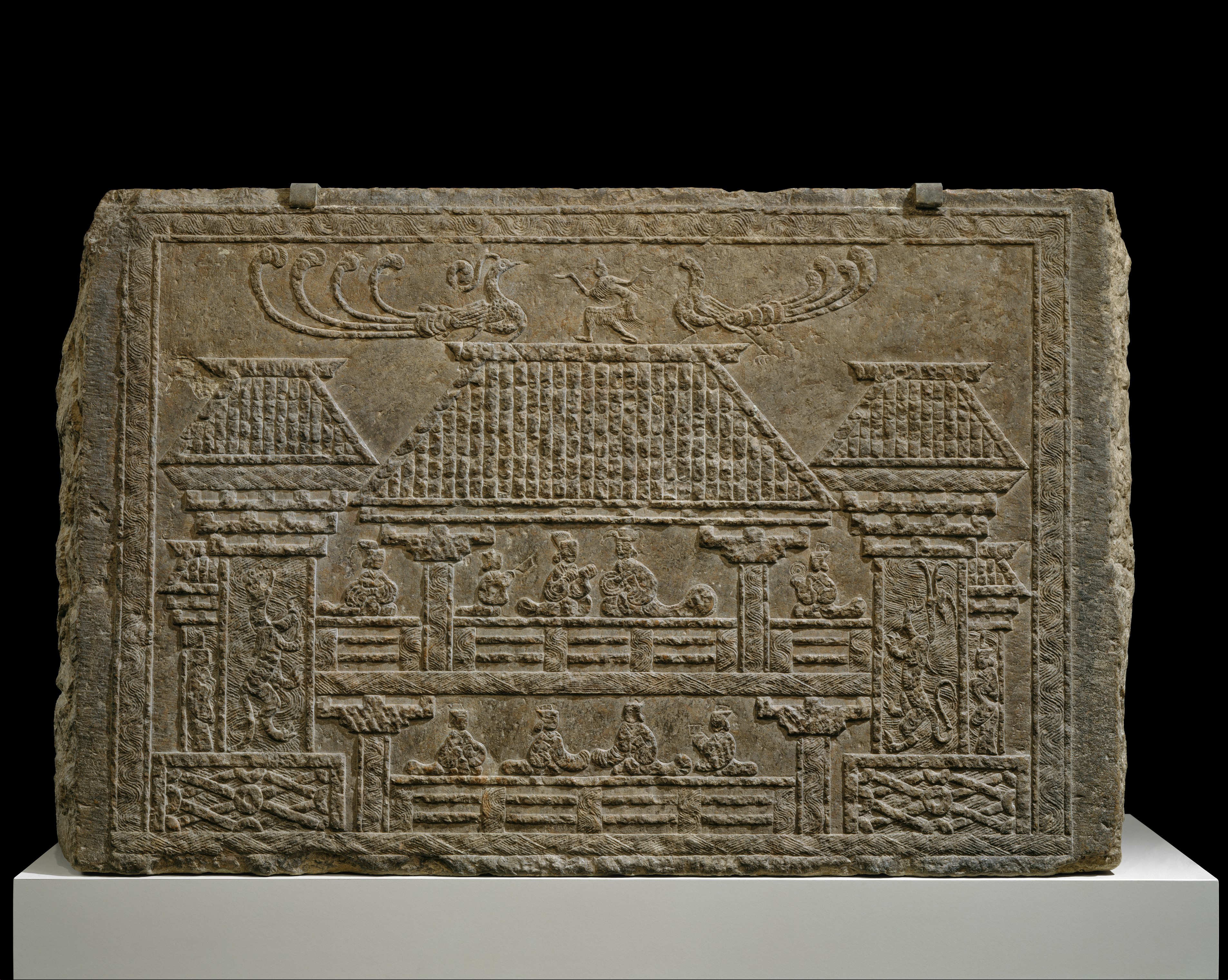
Chang'an was a walled capital, but its domestic life was organized at a smaller scale through wards, lanes, compounds, and courtyards. Elite families and high officials could maintain spacious residences with separate reception, service, and storage spaces; the surviving evidence does not establish a standard room arrangement for the city. Earth construction, timber, and roof tiles formed the principal architectural vocabulary, with screens and mats creating flexible interior arrangements. Courtyards brought light and air into the compound and gave space for carts, animals, drying cloth, and household rituals. The scale of palace occupation mattered: Changle and Weiyang occupied large enclosed areas in the southern city. Chang'an grew around these compounds before its outer walls were completed, rather than beginning as a uniform grid of homes.[1]
Ordinary households lived more compactly. Dwelling, storage, and workplace could overlap, so the same compound might hold sleeping mats, cooking vessels, looms, tools, grain jars, and a small stall or workshop. Roofs could be tile, thatch, or mixed materials depending on wealth, while walls were often earth or wood. Access to water, fuel, and work would have shaped how far household members needed to travel; the evidence does not recover these journeys for individual families. Gates and ward organization helped control movement, but most routines remained local, tied to nearby markets, work sites, shrines, and kin households.
Maintenance was constant because earth, timber, and roofing materials needed repair after rain, wind, and heavy use. Households needed to keep grain dry and protected from pests, using storage vessels and, where resources allowed, dedicated buildings. Hearths, braziers, and warm clothing could provide warmth, but their distribution among Chang'an households is not well documented. In summer, shaded courtyards and open doors helped manage heat and dust. Waste disposal, fire prevention, and water supply were practical neighborhood concerns, especially in a dense city where cooking fires, wooden structures, animals, and carts all shared limited space. Tools and woven cloth represented portable household wealth vulnerable to damp, smoke, theft, and insects.
The Sanjiu settlement, about 600 meters east of the city wall, gives a more concrete view of the working suburbs. A preliminary account of the 2025 excavation, reported by Xinhua from the Shaanxi provincial institute of archaeology, dates occupation from the middle Western Han into the Xin period. Eight courtyard buildings beside intersecting roads were interpreted as a food-processing area; across a ditch lay dwellings and evidence of bone working and metal production, including bone and shell ornaments. These remains connect living space with the preparation of food and manufactured goods close to the capital. They do not establish who owned the buildings or whether those working there were relatives, hired workers, or dependents.[3]
Food and Daily Meals
Food in Chang'an depended on the farming hinterland as much as on the city itself. Grain from the Wei River plain and other regions entered the capital through taxes, purchase, and official supply systems. Foxtail millet and common millet were especially important. Wheat, barley, beans, and rice occur in the regional evidence, but should not be presented as equally prominent staples.[4] Grains could be steamed or boiled, or prepared as gruel, accompanied by vegetables and other foods according to means and availability. Meat and elaborate dining were more accessible to wealthy households; a regular commoner menu cannot be reconstructed securely.
Five model granaries from late Western Han tomb M111 at Longzaocun, near Chang'an, contained remains identified as foxtail and common millet. Liao and colleagues' study also reviews other Xi'an burial finds and human isotope evidence from the Guanzhong region, which together support the importance of millet-based food. Burial offerings are selected provisions for the dead, however, not measured samples of everyday meals. The absence of wheat in this particular tomb does not prove its absence from the city's kitchens. These finds make grain storage a tangible concern while leaving the proportions eaten by different households uncertain.[4]
Markets gave the capital a wider diet than most villages could sustain. The exchange of food and fuel linked urban households to producers and carriers outside the walls. Official granaries and private storehouses shaped prices and security, while carts and pack animals brought flour, vegetables, and firewood through gates and ward streets. Cooking was usually done over hearths or stoves with ceramic, bronze, or iron vessels. Stone mills and hand querns turned grain into meal, and jars stored pickles, fermented sauces, wine, and water. The labor behind a meal began long before eating: hauling water, grinding grain, tending fire, washing vegetables, and cleaning utensils.
Elite dining in Chang'an used trays, cups, lacquered dishes, and carefully arranged service, with banquets marking family events, official relationships, and seasonal rites. Less wealthy households had fewer resources for costly serving ware and elaborate hospitality. Grain wine appeared in ritual and social settings, but the surviving evidence does not establish one everyday drinking habit for the capital. Ancestor offerings and calendar festivals brought special foods into the household, linking domestic routines to ritual obligation. Food storage was a serious household concern because a capital dependent on supply networks could still feel shortages when harvests, transport, or prices turned unfavorable.
Work and Labor
Chang'an's economy rested on administration, craft production, markets, transport, and the agricultural labor of its surrounding countryside. Officials, clerks, scribes, messengers, guards, and storehouse managers handled documents, seals, accounts, and deliveries. Their work required writing materials, trained memory, standardized weights, and a daily rhythm shaped by offices and gates. Around them were servants, cooks, stable hands, porters, cleaners, and attendants who made elite compounds function. Palace and government demand supported many specialized workers, from carpenters and metalworkers to textile producers, lacquer artisans, potters, and makers of carts, harnesses, mats, brushes, and storage containers.
Markets were major workplaces. Merchants, stallholders, brokers, money handlers, and transport workers bought and sold grain, cloth, tools, livestock, firewood, salt, wine, medicines, and prepared food. Some craftspeople worked from household workshops, selling finished goods directly or through market contacts. Others labored in state-supervised workshops connected to arms, luxury goods, coinage, iron, or official equipment. Porters and cart drivers moved goods between gates, markets, granaries, and private compounds. Boatmen and road carriers connected the capital with regional supply routes, making transport work essential even for people who never traveled far from their ward.
The western market brought manufacture and sale into the same district. Mark Edward Lewis's synthesis of excavations identifies a mint, iron casting, and workshops producing pottery figures for burials there, while warehouses stood against the market walls. Funeral provision thus created practical work in molding, firing, storing, and carrying objects as well as selling them. Literary descriptions of capital markets also emphasize official supervision, but some were composed under the Eastern Han: their orderly cityscapes should be read alongside excavated remains rather than taken as precise plans of Western Han daily activity.[5]
Women worked throughout the household economy. Textile production and food preparation were strongly associated with women, though a wealthy woman supervising servants had a different workload from someone producing cloth herself. Children could contribute to household work, but their tasks and training cannot be assigned a single pattern. State obligations could draw adult men into corvee labor for roads, walls, canals, transport, and public works, while taxes and rents shaped how families planned work across the year. The city also depended on farmers outside the walls who planted, irrigated, harvested, and carted produce inward. Written records served administration and some transactions; their survival does not imply universal literacy. Daily labor in Chang'an therefore joined urban specialization to rural production, with household survival depending on both cash exchange and family labor.
Social Structure
Chang'an made Han hierarchy visible. Palace compounds, government offices, elite residences, market wards, workshops, and servant quarters placed people of different rank in close contact while keeping formal distinctions clear. At the top were imperial relatives, high officials, and powerful landholding families whose households included retainers, clerks, servants, concubines, craftspeople, and clients. Lower officials, scholars, soldiers, merchants, artisans, small property holders, and hired laborers occupied varied positions. Wealth, official rank, and legal status did not form a single ladder: a prosperous merchant could command resources beyond those of a minor official, while enslaved people faced constraints distinct from those of free servants and clients. Formal ideology praised farming and official service more than trade, but the capital could not function without merchants, brokers, transport workers, and market specialists.
Family reputation shaped everyday opportunity. Marriage alliances, ancestry, property, and education affected whether a household could place sons in study or office, secure a good marriage, or protect its interests in disputes. Literacy mattered in the capital because documents, contracts, account books, and recommendations connected household life to administration. Yet much knowledge remained practical and oral: how to judge cloth, manage a stove, repair a cart axle, bargain over grain, or navigate market rules. Respect for elders and ancestors structured domestic behavior, while household heads were expected to manage labor, property, ritual duties, and relations with officials.
Religion and ritual crossed social boundaries. Households made offerings to ancestors, honored local spirits, and observed seasonal festivals. Funerals, weddings, market days, and visits to shrines brought people together while still displaying rank through clothing, seating, gifts, and forms of address. Wards also served administrative control; neighborly cooperation should not be confused with freedom from official oversight. Dependency was also part of the social landscape: servants, tenants, apprentices, and clients relied on powerful households for work or protection, while those households depended on their labor. Chang'an's social order was therefore both rigid and interactive, shaped by rank but lived through daily exchanges in lanes, markets, offices, and compounds.
Tools and Technology
Daily technology in Chang'an combined household tools with the equipment of a capital city. Kitchens used clay stoves, iron or bronze cooking vessels, ceramic jars, ladles, knives, chopping boards, and strainers. Grain was processed with mortars, pestles, querns, and mills, while water was carried in jars and buckets. Textile work depended on spindles, looms, needles, shears, dye vats, and measuring cords. Carpenters used saws, chisels, adzes, drills, and mallets to maintain houses, carts, gates, furniture, and storage structures.
Administration relied on a different toolkit: bamboo and wooden writing slips, brushes, ink, seals, seal clay, tallies, scales, and standardized measures. These objects made taxes, market transactions, warehouse inventories, and official orders practical. Transport technology included ox carts, pack saddles, ropes, baskets, harnesses, wheels, and road surfaces that required regular repair. Urban infrastructure depended on drainage ditches, wells, gates, walls, and granaries, each maintained through skilled and unskilled labor. Small technologies also mattered: lamps extended work into evening, locks protected stored goods, and woven mats organized floors, sleeping spaces, packing, and market display. For many residents, baskets, cords, shoulder poles, awls, brooms, and measuring sticks were as important as more impressive metal tools because they supported routine carrying, cleaning, repair, and sale.
Clothing and Materials
Clothing in Han Chang'an marked rank, gender, season, and work. Robes, tunics, trousers, belts, caps, and footwear varied with means and occupation. Hemp cloth was important for ordinary clothing, while silk was the prestige textile; ramie and other fibers also existed, but not every material was equally accessible in Chang'an.[6] Workers needed garments that could be belted up for carrying loads, kneeling, cooking, weaving, or handling animals. In cold months, padded robes and layered garments protected against wind and dry winter weather on the Guanzhong plain. Rain capes, hats, and sturdy footwear were useful for people who moved through markets and outer fields.
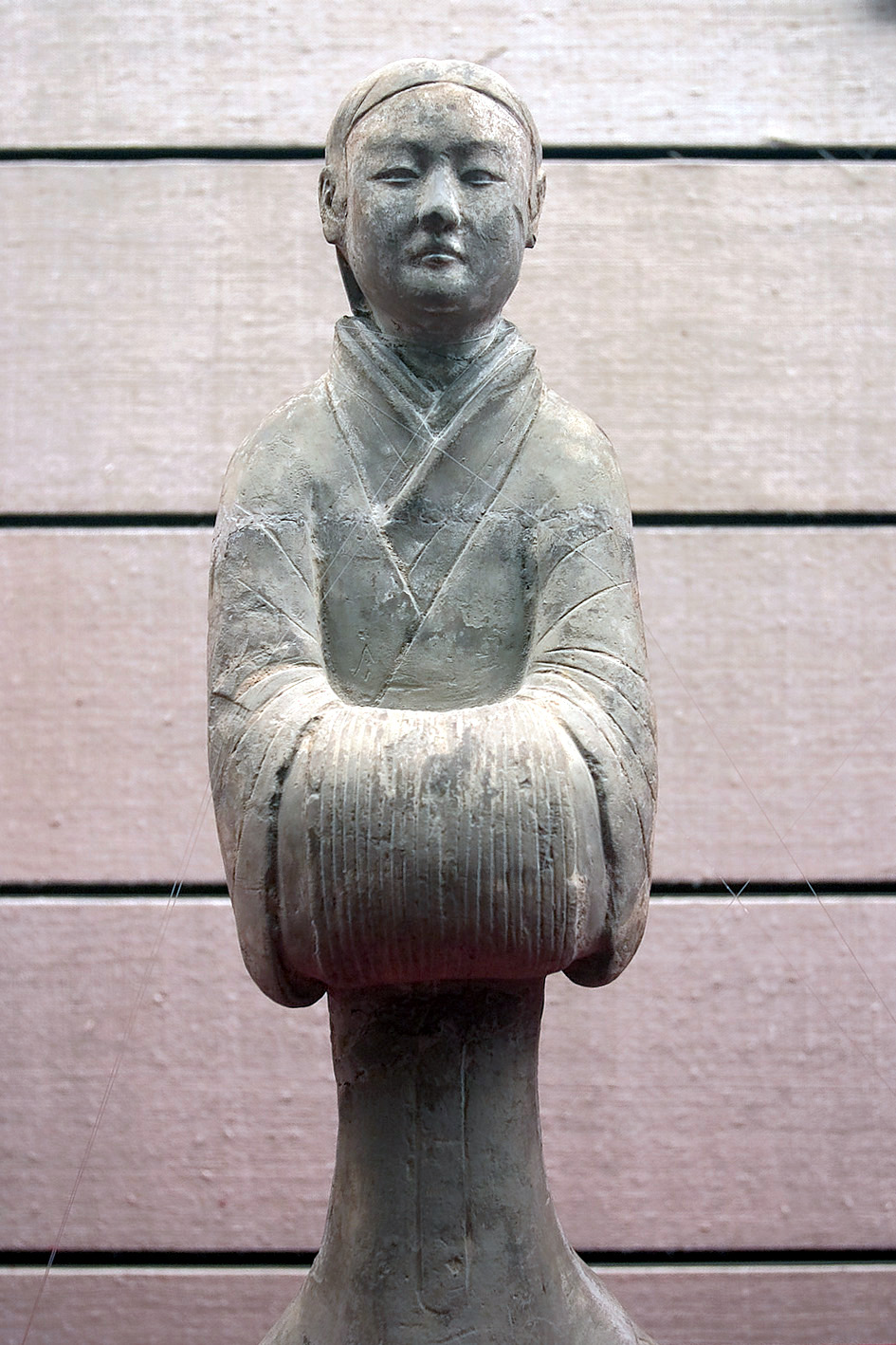

Elite clothing used finer silk, layered robes, patterned edges, official caps, sashes, and ornaments that made status immediately visible. Court and office dress followed rank expectations, while household clothing could be more relaxed but still carefully maintained. Textile care was labor-intensive. Repair and reuse could extend the value of cloth, although the evidence does not document a standard maintenance routine for this city. Dyes, embroidery, lacquered accessories, combs, hairpins, and belts connected clothing to wider craft industries. Cloth also functioned as wealth, payment, gift, and tax material, so spinning, weaving, measuring, storing, and repairing textiles were central parts of daily household management.
Related pages
- Daily life in Han Dynasty China (Western and Eastern Han, 202 BCE-220 CE)
- Daily life in Western Han China (202 BCE-9 CE)
- Daily life in Chang'an during the Tang dynasty
Sources and further reading
- ChinaCulture.org, “Site of Capital Chang'an of Han” (2008). Site overview and archaeological layout of the capital and its palaces.
- Asian Art Museum, “An Introduction to the Han Dynasty”. Chronology and the distinction between the Western and Eastern Han capitals.
- Xinhua, “Archaeological finding unveils Western Han suburban life in China's relic-rich province”, 28 January 2026, reproduced by People's Daily Online. Preliminary account of Sanjiu based on the Shaanxi provincial institute of archaeology's announcement; the settlement dates extend into Xin, rather than ending with Western Han rule.
- Jingwen Liao, Ming Li, Edward Allen, Wuhong Luo, and Pengfei Sheng, “The Millet of the Matter: Archeobotanical Evidence for Farming Strategies of Western Han Dynasty Core Area Inhabitants”, Frontiers in Plant Science 13 (2022), article 929047. DOI: 10.3389/fpls.2022.929047.
- Mark Edward Lewis, The Early Chinese Empires: Qin and Han (Harvard University Press, 2007), chapter 4, especially pp. 80-85. Publisher record; text consulted. Uses both archaeological evidence and literary accounts, whose dates and perspectives require distinction.
- University of Washington, A Visual Sourcebook of Chinese Civilization, “Making Cloth”. Used for the early history of hemp and silk; its later illustrations are not evidence for Han Chang'an.