Daily life in Kyoto during the Heian period
A grounded look at routines in the imperial capital, where court culture met the work of neighborhoods, artisans, and nearby farming villages.
Heian-kyo was a planned city with broad avenues, wards, and palace compounds, but daily life moved along smaller lanes and waterways. Court officials and noble households shaped elite routines, while commoners and artisans handled the practical work that kept the city fed, clothed, and maintained.
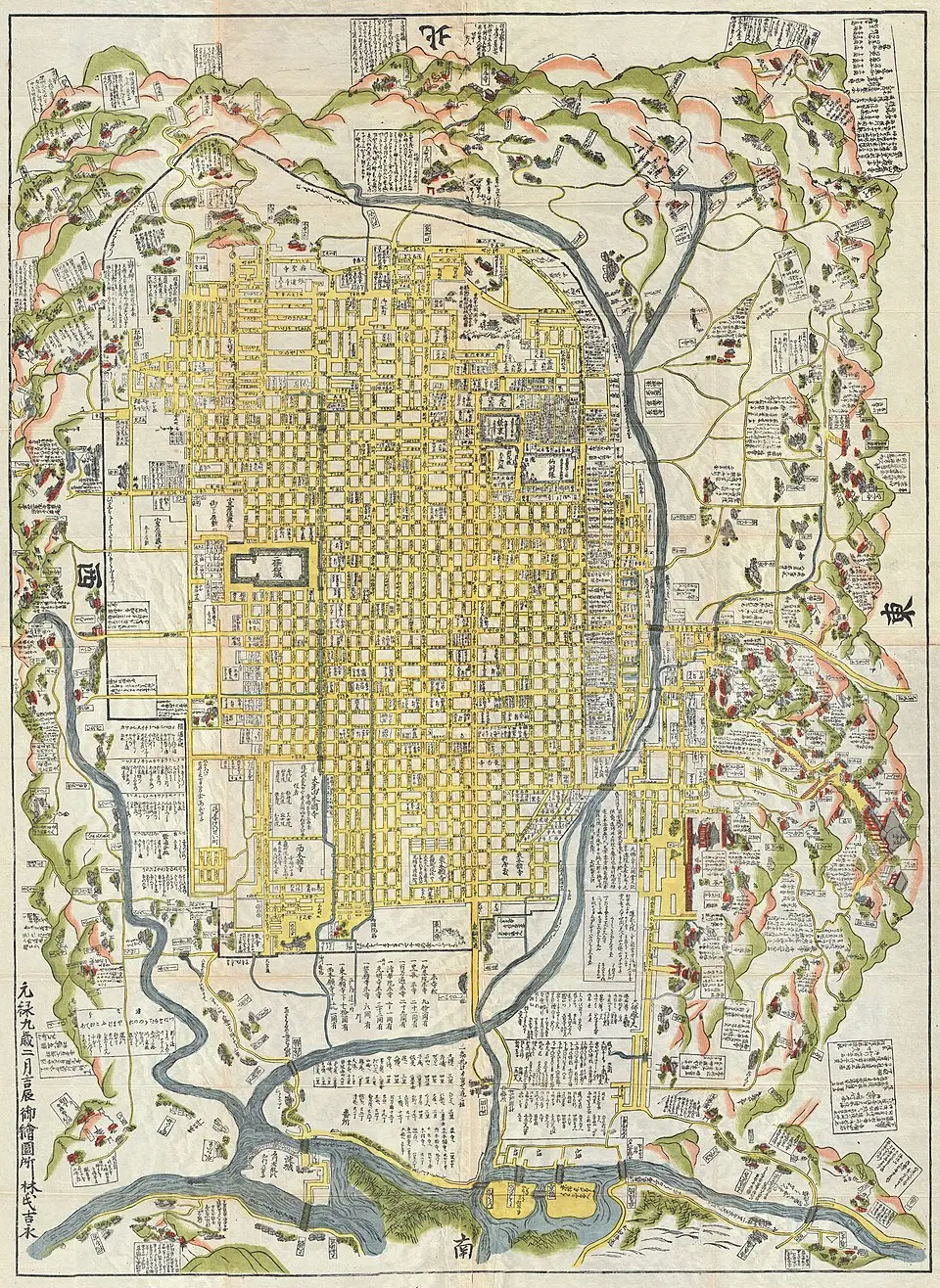
Did Heian-kyo have city walls? Most historical descriptions treat Heian-kyo as an unwalled capital, unlike Tang Chang'an, though the imperial palace district itself used walls and gates.[1][2]
Housing and Living Spaces
Aristocratic households lived in large compounds built in the shinden-zukuri style, with a main hall facing a garden, connecting corridors, and separate wings for sleeping, storage, and service work. The layout emphasized open spaces, verandas, and seasonal use, with screens and curtains dividing rooms rather than permanent walls. These estates relied on attendants to manage lighting, heating with braziers, and the constant care of wood and paper surfaces, and they often included storehouses and covered passages to protect valuables from rain. Gardens were practical as well as aesthetic, offering drainage, cooling, and carefully arranged views that framed daily movement. Furnishings were minimal and portable, which allowed rooms to shift function from reception to sleeping to ritual use depending on the time of day.
Beyond the noble wards, Kyoto was a city of smaller wooden dwellings, row houses, and workshops clustered near markets, temples, and river crossings. Commoner housing was simpler, with packed-earth floors, shared hearths, and multi-use rooms where cooking, sleeping, and storage overlapped. Roofs were thatched or shingled, and fires were a constant risk, shaping how neighborhoods organized watch duties, water storage, and rebuilding after frequent blazes. Urban life was tied to the grid of streets and canals, but daily movement was local and practical: fetching water, carrying goods, and visiting nearby shrines. In both elite and modest homes, space was flexible, and the household relied on careful organization of mats, chests, and hanging racks to manage seasonal bedding, clothing, and tools. Shared lanes, bridges, and temple grounds functioned as extensions of the home, providing space for work, social exchange, and community notice.
Maintenance was an ongoing task. Roofs needed re-thatching, wooden beams had to be protected from rot, and paper screens were replaced after storms or heavy use. Neighborhoods often pooled labor for repairs and kept simple firefighting tools on hand. Urban planning set the broad layout, but daily living depended on small, local solutions: storing rainwater, managing waste in pits or collection areas, and keeping animals and work materials from crowding narrow lanes. These practical routines shaped how people moved through their homes and how households coordinated with neighbors.
Food and Daily Meals
Meals centered on rice when available, with millet or barley used by households with fewer resources. Vegetables, greens, and herbs came from gardens and nearby farms, while fish from rivers and the inland sea supplied protein more often than meat. Soy products, salt, and fermented seasonings helped preserve food and build flavor, and pickling was a common method to store vegetables for lean seasons. Court households received supplies through estates and official channels, allowing for more refined dishes, multiple courses, and careful attention to presentation. Commoner meals were simpler but steady, relying on simmered grains, broths, and seasonal produce, with portion size and variety shifting by harvest success and household wealth.
Markets within the city sold dried fish, seaweed, tofu, and prepared foods for those who could afford them, while merchants and porters carried bulk staples into neighborhoods. Tea had not yet become an everyday drink, but herbal infusions and warmed water were common, and sake appeared in festival settings and household rituals. The calendar of religious observances and court ceremonies shaped feasting and fasting, and the timing of meals followed daylight and work rhythms rather than fixed hours. Cooking required careful management of fuel, with charcoal and firewood used efficiently, and kitchens relied on iron pots, wooden ladles, and earthenware storage jars. Food preparation was labor-intensive, with rice washing, grinding, and boiling done by hand, and with household members assigned specific tasks for fetching water, tending fires, and serving elders and guests.
Serving customs reflected status. Elite meals were often arranged on individual trays with a sequence of small dishes, while common households shared bowls and simple platters. Clay and lacquered vessels were valuable and carefully maintained, and chopsticks and ladles were stored for daily use. Seasonal foods marked festivals, with sweets, mochi, and special fish appearing at ritual times, and offerings to shrines and temples were part of household practice. Leftovers were reused in broths or mixed with grains, and the careful management of food stocks was essential for stability during lean months.
Work and Labor
Kyoto was the administrative center of the realm, so a significant portion of work involved paperwork, record keeping, and court service. Scribes, clerks, and messengers maintained tax records and communication with provincial estates, while skilled attendants managed the daily routines of noble families. Court service included copying documents, preparing ceremonial spaces, arranging transport, and overseeing storehouses for food, textiles, and ritual goods. Artisans supported the capital: carpenters, lacquer workers, metalworkers, papermakers, and textile producers supplied household goods and ceremonial objects. Markets depended on porters, shopkeepers, and transport workers who moved goods by cart, pack animal, or boat along nearby rivers.
Many families kept ties to rural land, and food and textiles flowed into the city as taxes or trade, linking urban demand to agricultural labor beyond the walls. Women worked as weavers, dyers, and seamstresses, producing cloth for both the court and common households, and domestic service employed a large number of attendants in elite compounds. Religious institutions provided another source of employment, from temple maintenance and ritual preparation to the copying of sutras and the crafting of offerings. Labor routines were shaped by seasonal demands and ceremonial calendars, and much work was done in small workshops or household spaces rather than in large centralized facilities. Apprenticeship and kin networks often determined who learned a trade, and household status set expectations for the type of work considered appropriate, but practical skill could still build reputation within a neighborhood.
Some work was tied to obligations rather than wages, including corvee labor for public projects and the transport of goods for officials. Court calendars created intense bursts of activity around ceremonies, while agricultural seasons drew labor and supplies in predictable cycles. The pace of work followed daylight, with early starts and evening cleanup, and many trades blended production with retail, as craftspeople sold directly from their homes or stalls. Tools, materials, and finished goods were moved through tightly connected networks of family and neighborhood ties, making reputation and reliability essential for steady employment.
Social Structure
Heian society was layered, with the emperor and court aristocracy at the top, followed by officials, scholars, and a broad range of commoners who handled most of the city’s practical tasks. Rank and lineage mattered greatly in court life, affecting access to office, marriage prospects, and ceremonial roles. Noble households operated as extended communities with attendants, retainers, and specialized workers tied to the family’s standing, and the court environment emphasized etiquette, poetry, and gift exchange as markers of refinement. Provincial elites and emerging warrior families were present in the background, but the capital remained dominated by court status and bureaucratic titles. Commoners were organized through neighborhood ties, occupational groups, and local officials who managed taxes and basic order.
Religion shaped social life through shrines and temples that hosted festivals, rites, and funerals, bringing people together across status lines. Education and literacy were largely concentrated in the court, but practical knowledge of farming, weaving, and building circulated widely among commoners, and skill within a trade could raise local standing. Gender roles were distinct yet flexible in practice, with women playing central roles in textile production, household management, and the cultural life of the court. Social interaction was guided by etiquette, patronage, and seasonal observances that structured both elite and everyday relationships. Obligations to family and household were strong, and daily life depended on reciprocal ties that linked servants, artisans, and officials to the larger social order.
Law codes and local administration affected everyday disputes about property, taxes, and labor, and neighborhood leaders often mediated conflicts before matters reached officials. Patronage networks connected lower-ranked households to elite families, providing protection and access to work in exchange for service and loyalty. Public festivals and processions offered moments where social boundaries softened, even as rank remained visible in clothing and seating order. The city’s social fabric was therefore both hierarchical and cooperative, relying on ritual formality in the court and practical mutual aid in the streets and wards.
Tools and Technology
Daily life relied on a mix of simple hand tools and specialized crafts. Carpentry used saws, chisels, and planes suited to working softwoods, while joinery techniques allowed buildings to be assembled without heavy metal fasteners. Papermaking and brushwork underpinned administration and literature, with inkstones, brushes, and wooden tablets common in offices and households. Agriculture around the capital used iron hoes, sickles, and wooden plows, while irrigation channels and embankments managed water for rice fields. Transport combined ox-drawn carts for heavy loads with boats for moving goods along rivers, and walking remained the most common mode for daily errands.
Lighting came from oil lamps and candles, and heating relied on charcoal braziers rather than enclosed stoves, which meant rooms were warmed in localized areas rather than uniformly. Household storage used woven baskets, lacquered boxes, and ceramic jars to protect food and textiles from moisture and pests, and kitchens used iron pots, wooden paddles, and stone mortars for grinding. Textile production relied on spindles, looms, and dyeing vats, while lacquer work required careful polishing tools and drying racks. The city’s infrastructure depended on careful maintenance of canals, bridges, and drainage ditches, all of which required steady local labor and practical engineering that blended tradition with ongoing repair.
Clothing and Materials
Clothing marked status clearly. Court dress emphasized layered silk garments, with color combinations reflecting rank and season, and with fabrics chosen for drape and texture. The kosode served as an everyday underlayer, while more formal wear used multiple robes and wide sleeves, and court events required careful coordination of layers and colors. Commoners wore simpler clothing made from hemp or coarse silk, often dyed in subdued colors and mended repeatedly. Footwear ranged from straw sandals for daily walking to more elaborate shoes for formal occasions, and workers used straw capes and hats for protection from rain.
Textiles were valuable, and fabric was reused, re-dyed, or cut down as garments wore out, with older robes reshaped for children or household use. Dyeing and weaving were major crafts, and households often kept tools for spinning, weaving, and sewing. Accessories such as sashes, hairpins, and hats were used to mark occasion and role, and belts and cords kept layered garments in place. Laundry relied on rivers or tubs, and garments were aired, brushed, and repaired rather than washed frequently, preserving delicate fibers. Seasonal layering was essential, with heavier fabrics in colder months and lighter fabrics in warmer weather, and the careful care of garments was a constant part of household routine.
Kyoto in the Heian period balanced an ornate court culture with the steady labor of artisans, transport workers, and farmers who supplied the capital. The rhythms of seasons, ritual, and neighborhood life shaped everyday routines, creating a city where formal ceremony and practical necessity were tightly interwoven.
Related pages
- Daily life in Western Han China (202 BCE-9 CE)
- Daily life in medieval France during the 1200s
- Daily life in Viking Age Scandinavia during the 900s
References
- Kyoto City. (2021). Kyoto International City Vision. https://www.city.kyoto.lg.jp/sogo/cmsfiles/contents/0000283/283160/vision_en.pdf
- Wikipedia contributors. (n.d.). Heian-kyo. https://en.wikipedia.org/wiki/Heian-ky%C5%8D