Daily life in Luoyang during the Eastern Han period
Explore housing, food, work, social hierarchy, tools, and clothing in Eastern Han Luoyang, with attention to households, markets, and the surrounding countryside.
Evidence note. The two supplied references accompany illustrations; this page contains no claim-level citations for its broader account of daily life. General Han context should therefore be distinguished from documented Luoyang-specific details. The household, market, and countryside scenes below are possible reconstructions based on that broader context, not locally established details supported by the supplied references.
Luoyang became the main capital of the Eastern Han after 25 CE, replacing Chang'an as the center of imperial government. As a general reconstruction of capital life, the account below brings officials, scribes, scholars, artisans, merchants, servants, and farmers into a landscape of palace precincts, offices, markets, roads, suburbs, and ritual spaces. Administration provides the setting, while ordinary tasks offer a way to consider daily experience: carrying water, preparing grain, tending animals, copying documents, buying fuel, and keeping household ties intact.
This page focuses on Luoyang as an urban place within the Eastern Han world. For wider background, see daily life in Eastern Han China, daily life in Han Dynasty China, and daily life in Chang'an during the Han dynasty.
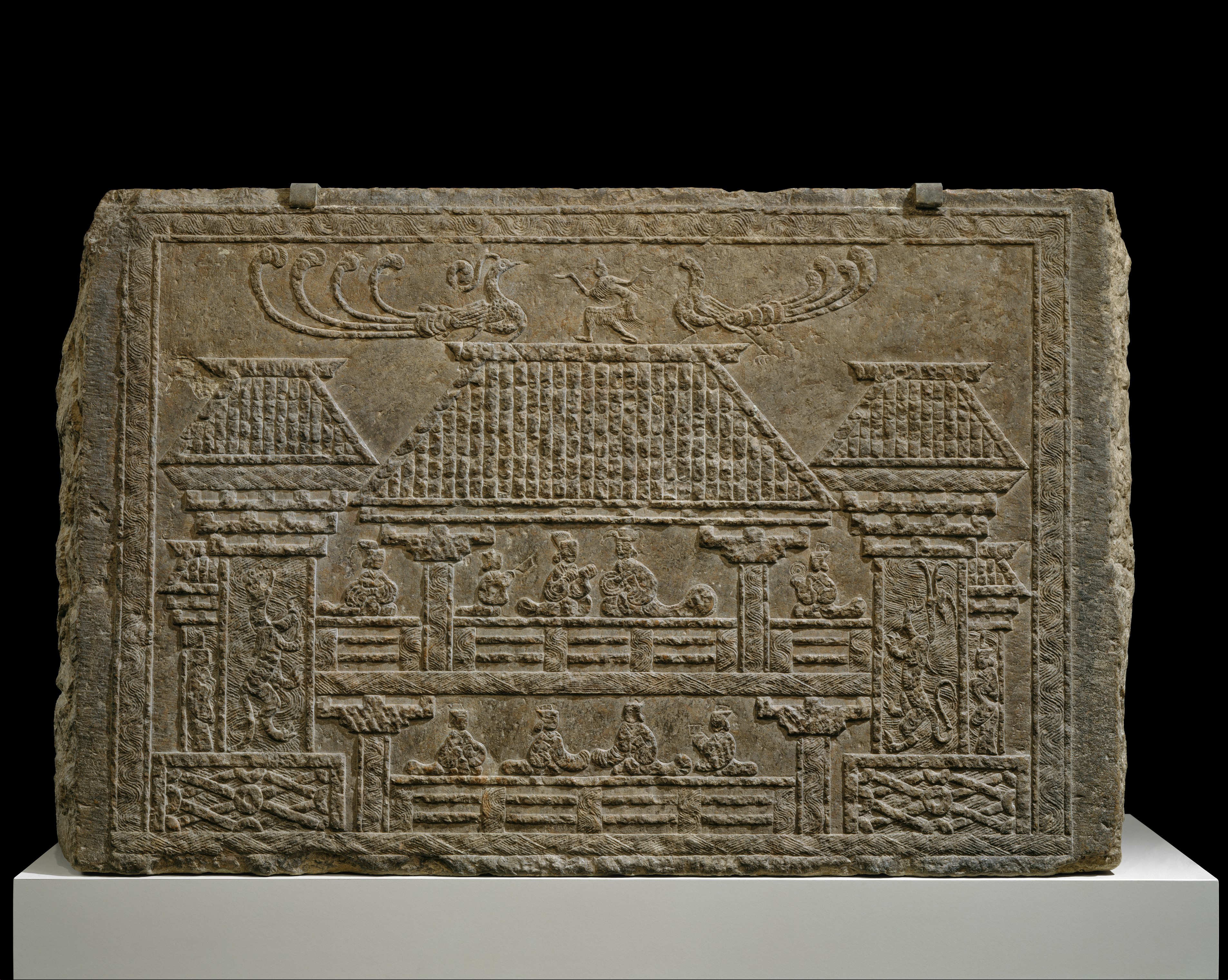
Housing and Living Spaces
General Han housing patterns offer a possible framework for imagining domestic life in Luoyang's walled compounds, lanes, market districts, and suburbs; the supplied references do not document these local arrangements. Elite households and high officials might occupy large residences with gates, reception halls, kitchens, storerooms, wells, courtyards, servants' rooms, and spaces for carts and animals. Construction could combine rammed earth, timber framing, plastered walls, packed floors, and tiled roofs where money allowed. Courtyards offered light, air, and space for drying cloth, sorting grain, and family rituals. Mats, low tables, screens, chests, and portable lamps could allow rooms to serve for eating, sleeping, meetings, and textile work.
In this reconstruction, modest homes would be smaller and more crowded. A craft family might live beside its tools, raw materials, storage jars, and finished goods, while a stallholder's household might treat the front of a dwelling as a point of sale. Poorer housing could use more thatch, wood, and earth, with shared alleys providing space to draw water, watch children, or exchange news. Fire, damp, smoke, pests, and theft would require attention: grain needed protected storage in jars or bins, fuel had to stay dry, and documents or cloth needed protection from insects. Clothing, bedding, hearths, and braziers provide a general Han context for heating rather than a whole-house system.
The surrounding fields and settlements provide another possible setting for households supplying vegetables, grain, fodder, bricks, timber, and fuel to the capital. Suburban villages or outer neighborhoods within reach of markets could combine domestic space with storage and animal work. Roads, canals, irrigation ditches, and seasonal weather would shape such routines, although their role in particular households is not established here. A household can thus be considered as a dwelling, work site, storage space, ritual center, and point of connection to neighbors and officials.
Food and Daily Meals
The food account uses general northern Han context to reconstruct possible supplies and meals in Luoyang; the supplied references do not establish particular local diets. The Luo River and Yellow River hinterland, together with longer supply routes, would connect the capital to taxed grain, market produce, salt, oil, and preserved foods. Northern staples included millet, wheat, barley, beans, and hempseed, while rice could arrive through trade and official supply but was less ordinary than in southern regions. Possible meals included boiled or steamed grains, thick gruels, wheat cakes, bean dishes, vegetables, pickles, and small amounts of meat or fish used to flavor larger portions of staple food. Pork, chicken, dog, mutton, freshwater fish, and game belong here as possibilities more associated with wealthier households and festival meals than with the daily bowls of laboring families.
Markets could widen the range of food beyond what a household grew. Vegetables, fruit, dried fish, sauces, wine, fuel, salt, and prepared dishes offer a possible picture of supplies serving officials, workers, travelers, and servants unable to return home during the day. Grain might pass through official granaries, private storehouses, mills, carts, and pack animals before becoming flour, cakes, or porridge. Preparation required drawing water, grinding grain, chopping greens, tending fires, washing vessels, and managing smoke. Drying, salting, pickling, and fermenting helped preserve supplies against shortages.
General Han distinctions of rank and setting also suggest differences between meals. Elite entertaining of clients, relatives, or officials could involve carefully ordered dishes, while ordinary families ate simpler meals in household groups, with age, gender, and status influencing service. Wine marked ritual, hospitality, and social exchange; broths, boiled water, and thin grain drinks belong to the account of more ordinary routines. Ancestor offerings and seasonal festivals brought special foods into the home. Leftovers could become soups, porridges, or animal feed, and careful stock management would matter when prices, transport problems, harvest failure, or political disorder disrupted supply. These details should not be read as documented menus or serving practices for particular Luoyang households.
Work and Labor
Luoyang's role as an imperial capital and regional market provides a setting for considering work, but the supplied references do not document the local distribution of occupations. A reconstruction draws on officials, clerks, scribes, seal handlers, messengers, guards, storehouse managers, and ritual assistants moving between administrative compounds. Cooks, grooms, porters, cleaners, wet nurses, entertainers, and attendants would support elite households and offices. Court demand offers a context for the production and supply of formal clothing, carts, furniture, lacquerware, metal fittings, pottery, paper, brushes, lamps, food, wine, fuel, and ritual goods.
General Han craft work could take place in household shops, market stalls, private workshops, and state-supervised settings. Carpenters, potters, textile workers, and metalworkers supplied buildings, household goods, clothing, and equipment; their tools and repair tasks are considered below. Potters supplied jars, lamps, roof tiles, figurines, and cooking vessels. Papermakers and brush makers supported the growing paperwork of Eastern Han administration, while copyists and teachers served families able to afford education. Brokers, stallholders, money handlers, haulers, innkeepers, cooks, and guards form part of the possible market workforce, with personal trust as well as formal regulation shaping transactions.
Rural labor provides essential context for the capital's supplies. Farmers plowed, sowed, weeded, irrigated, harvested, threshed, raised animals, cut fuel, and carried produce inward. Some households could combine fieldwork with craft production, especially spinning and weaving during slower agricultural seasons. Corvee demands could draw men into road work, transport, canal repair, construction, or government service, while taxes and rents shaped family labor. Women's responsibilities could include food preparation, textile work, storage, childcare, elder care, and small-scale exchange; children might gather fuel, watch animals, carry water, and learn household skills. These general patterns suggest a shifting mix of household production, market dealing, service, seasonal obligation, and kin-based cooperation rather than a single occupation, without establishing the routine of any particular Luoyang resident.
Social Structure
Eastern Han hierarchy provides general context for imagining social distinctions in Luoyang; the supplied references do not establish their expression in particular neighborhoods. Palace areas, official compounds, elite residences, schools, market wards, shrines, workshops, and suburban fields offer possible settings where people of unequal rank interacted. Imperial relatives, high officials, powerful landholding families, and those with access to office or patronage held advantages over lower officials, scholars, scribes, soldiers, merchants, artisans, smallholders, tenants, servants, hired laborers, enslaved people, apprentices, and migrants. Confucian ideals praised hierarchy, filial duty, agriculture, and educated service, even as urban life depended on less prestigious commercial, transport, craft, and domestic work.
Within this broader Han context, family and lineage shaped opportunity. A household's reputation could affect marriage prospects, credit, protection in disputes, access to teachers, and chances for official recommendation. Reading, writing, classical learning, and document handling offered paths into clerical work or government service, while practical skills could be learned from relatives and masters. Ancestor rites gave households a moral center, and respect for elders structured meals, inheritance, mourning, and everyday speech. Women were formally placed under patriarchal authority, yet management of textile production, storage, servants, food, dowry goods, and kin relationships could give them substantial practical responsibility.
Possible neighborhood interactions include cooperation over wells, fire response, childcare, lending, funerals, festival preparations, and mediation of quarrels. Markets could bring together officials' servants, farmers, traders, students, craft workers, and travelers, making reputation important for business. Service, tenancy, debt, apprenticeship, or clientage could tie poorer households to richer ones, providing protection while limiting independence. The later Eastern Han saw stronger great-family influence and periods of political tension. Against that general background, greeting elders, honoring ancestors, bargaining over grain, arranging marriages, and borrowing tools suggest ways to imagine local exchanges, rather than documented scenes from Luoyang.
Tools and Technology
The following equipment belongs to the page's general Han context, not a documented inventory from Luoyang. Kitchen equipment included clay stoves, hearths, ceramic jars, iron or bronze pots, steamers, ladles, knives, strainers, chopping boards, mortars, pestles, querns, and wooden trays. Elite dining could add lacquered cups, trays, tables, and serving vessels. Textile work used spindles, looms, needles, shears, dye vats, measuring cords, baskets, and drying frames for spinning fiber, weaving cloth, dyeing yarn, stitching garments, and mending worn robes.
Carpenters and repair workers used saws, chisels, adzes, drills, planes, mallets, wedges, ropes, and measuring lines. Their possible tasks included repairing gates, roofs, carts, boxes, furniture, and household equipment. Metalworkers supplied knives, tools, hinges, locks, agricultural implements, and fittings for carts or harness. Farmers used iron plowshares, hoes, spades, sickles, rakes, yokes, carts, baskets, and irrigation tools; transport workers relied on wheels, axles, harness, ropes, shoulder poles, pack saddles, and road repairs. Household maintenance could include patching roofs, replastering walls, clearing wells and drains, and sweeping and leveling courtyards. Worn axles, cracked jars, broken straps, and loose roof tiles illustrate the kinds of damage that could interrupt work.
Administration used brushes, ink, inkstones, bamboo or wooden slips, paper, seals, seal clay, tallies, weights, measures, account books, registers, and storage boxes. Paper became increasingly important in Eastern Han use, though older writing materials continued alongside it. Wells, drains, bridges, gates, walls, granaries, market stalls, and road surfaces provide a general framework for considering infrastructure maintained by skilled and unskilled labor. Small objects also mattered: locks protected stored goods, lamps extended work after dark, mats organized floors, and baskets carried supplies.
Textile care joined production to repair: garments could be brushed, aired, mended, patched, re-hemmed, dyed again, cut down for children, or reused as linings and household cloth. These practices, like the other tasks listed here, illustrate possible household routines rather than evidence for their frequency in Luoyang.
Clothing and Materials
General Eastern Han clothing patterns offer context for rank, occupation, gender, season, and occasion, but the supplied references do not establish a specifically Luoyang wardrobe. Robes, tunics, trousers, belts, caps, cloth shoes, and sandals could be made from hemp, ramie, wool, leather, or coarse silk according to means and work. Laborers needed garments that could be belted up for carrying loads, kneeling, cooking, grinding, digging, or handling animals. Cold winters on the north China plain provide a setting for padded robes, layered garments, socks, caps, and heavier bedding, with lighter cloth and shade in summer. Rain capes, straw hats, and sturdy footwear were practical possibilities for movement between fields, markets, and city lanes.
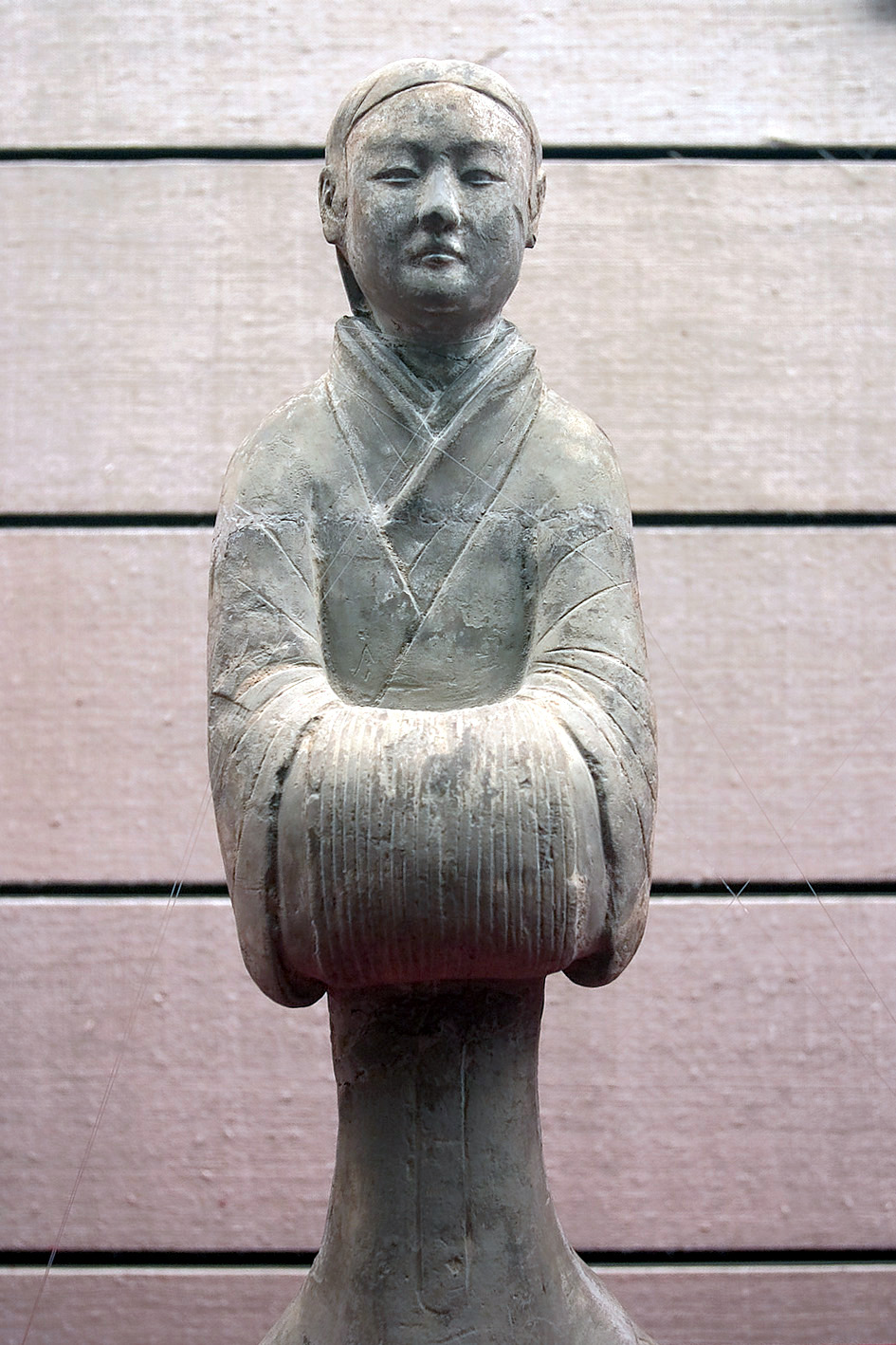

In the wider Han context, elite dress used finer silk, layered robes, patterned borders, official caps, sashes, shoes, hair ornaments, and accessories to express status in offices, ceremonies, and visits. Fabric also served as wealth, tax material, gift, wage, and dowry property, making measurement and storage important. Dyes, embroidery, lacquered boxes, combs, pins, belts, and mirrors connected clothing to craft networks. Durability and repair could be central to household clothing choices, while cleanliness, fit, material, and use at funerals, festivals, and visits gave even simple garments social meaning.
Seen through this general Han context, Luoyang's daily life can be considered through the relationship between imperial administration, household work, market exchange, and family obligation. The supplied illustration references leave the local details of that reconstruction unverified.