Daily life in Heian-kyo during the 11th century
A grounded look at routines in the imperial capital at the height of court culture, where poetry, paperwork, craft labor, and food supply all depended on ordinary household work.
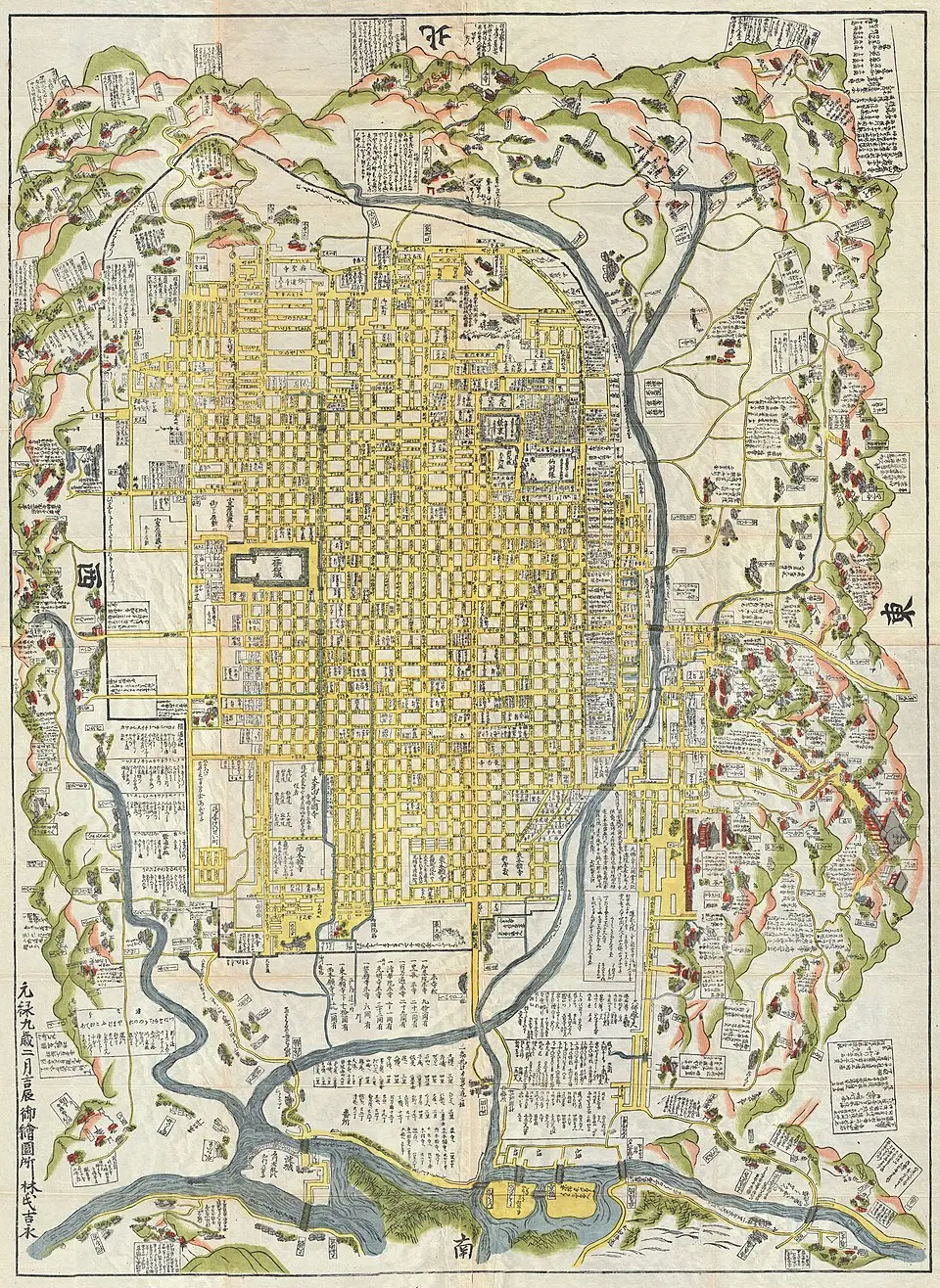
In the 11th century, Heian-kyo was the ceremonial and administrative heart of Japan. The city followed the memory of a planned capital, with broad avenues and official districts, but everyday life was less orderly than the plan suggests. Aristocratic households clustered around the palace and high-status wards, while artisans, servants, merchants, religious workers, and laboring families kept the capital functioning through cooking, carrying, sewing, copying, trading, and repair. Court culture was brilliant, but it rested on ordinary routines repeated in kitchens, workshops, lanes, storehouses, and nearby farming villages.
Housing and Living Spaces
Elite housing in 11th-century Heian-kyo is often associated with shinden-zukuri mansions. A main hall faced south toward a garden, with subsidiary buildings, corridors, verandas, service spaces, and storage areas arranged around the compound. Rooms were not filled with heavy furniture. Screens, curtains, mats, chests, and low stands allowed spaces to change function during the day, from reception to sleeping to ritual use. Privacy depended on portable partitions and etiquette as much as walls, and household movement was shaped by rank, gender, and service roles.
These aristocratic compounds required constant labor. Attendants managed lamps, braziers, water, clothing, letters, bedding, curtains, carts, and food stores. Roofs, paper screens, wooden floors, bridges, garden edges, and drainage channels all needed maintenance in a damp climate. Gardens were not only decorative; they cooled the house, framed views, drained water, and provided settings for ceremonies, poetry gatherings, and seasonal visits. The elegance remembered in court literature was maintained by workers who cleaned, repaired, carried, and prepared.
Most residents lived more modestly. Smaller wooden dwellings, rented rooms, and home-workshop spaces stood near markets, temple approaches, river crossings, and service districts. Common households used compact rooms for cooking, storage, sleeping, and production. Packed-earth areas, raised wooden floors, thatched or shingled roofs, and simple hearth arrangements were practical rather than refined. Fires were a constant threat, and neighborhoods relied on vigilance, water storage, and quick rebuilding. The capital's grand plan mattered, but daily living depended on local wells, lanes, bridges, and shared labor.
Food and Daily Meals
Food supply connected Heian-kyo to estates, villages, rivers, and coastal trade. Rice was the prestige staple and the core of elite provisioning, but many households also used millet, barley, wheat products, and mixed grains. Vegetables, greens, gourds, mushrooms, beans, seaweed, pickles, and fermented seasonings added variety. Fish from rivers, lakes, and the inland sea was more common than meat, while poultry and game appeared more often in elite or special contexts. Buddhist influence and court convention helped restrain everyday meat consumption, though practice varied by setting.
Aristocratic meals could involve multiple dishes, individual trays, lacquered vessels, careful arrangement, and seasonal attention. Court households received supplies through estate income, gifts, official channels, and market purchase, which made refined dining possible for high-ranking families. Beneath that surface was heavy domestic work: washing rice, carrying water, grinding grain, chopping greens, tending fires, storing dried foods, salting fish, and managing leftovers. Fuel was an expense, so charcoal and firewood had to be used carefully.
Commoner meals were plainer and more variable. A household might eat cooked grain with soup, pickled vegetables, dried fish, tofu-like bean preparations, or foraged greens when available. Markets offered dried fish, salt, seaweed, oil, prepared foods, and festival treats, but purchasing power shaped access. Sake appeared in ritual, entertainment, and seasonal gatherings, while warmed water and herbal drinks were more ordinary. Food habits followed work rhythms and daylight rather than modern fixed meal times, and lean seasons made careful storage essential.
Work and Labor
Heian-kyo's visible elite world depended on paperwork. Officials, scribes, messengers, clerks, and household secretaries copied documents, managed estate records, carried orders, tracked taxes, prepared petitions, and maintained correspondence. Brush, ink, paper, and trained memory were everyday tools of administration. The 11th-century court was deeply shaped by precedent and ceremony, so work often meant knowing the correct timing, wording, clothing, route, and seating for an event.
Craft and service labor filled the city. Carpenters repaired compounds, bridge sections, carts, and storehouses. Weavers, dyers, seamstresses, lacquer workers, metalworkers, papermakers, potters, and basket makers supplied the materials of urban life. Porters and cart drivers moved rice, timber, charcoal, cloth, jars, and bundles through streets and across river routes. Servants in noble households prepared rooms, handled robes, cooked, fetched water, cared for children, accompanied women behind screens or curtains, and managed the hidden logistics of courtly display.
Much of this labor was organized through households, patronage, obligations, and estate networks rather than a simple wage market. Women worked in textile production, household management, food preparation, service, and courtly literary culture, with roles varying sharply by rank. Children and younger dependents assisted with errands, fuel, cleaning, and craft preparation. Rural workers outside the capital raised rice, cut timber, made charcoal, wove cloth, and transported goods that urban households consumed. Daily life in the capital cannot be separated from the labor of its surrounding countryside.
Social Structure
Heian-kyo was hierarchical. Rank, lineage, office, and proximity to powerful families shaped where people lived, whom they served, how they dressed, and what work they could pursue. The highest aristocrats lived within networks of marriage, patronage, poetry exchange, ceremonial obligation, and estate income. The Fujiwara regents dominated much of 11th-century court politics, but the everyday point is broader: status was visible in housing, vehicles, servants, fabrics, ritual access, and the ability to command other people's time.
Below the elite were lower officials, scribes, artisans, merchants, servants, religious personnel, entertainers, porters, and laboring households. Social life depended on ties of service and obligation. A modest household might seek protection from a patron, rent space near a workshop, serve a temple, or maintain links to rural kin. Reputation mattered in practical ways: a craftsperson needed reliable customers, a porter needed trust, and a servant needed attachment to a household that could provide food and security.
Religion shaped social life across ranks. Shrines and temples organized festivals, rites, offerings, funerals, healing practices, and seasonal observances. Buddhist ideas about impermanence and salvation coexisted with court ritual and local shrine practice. Public festivals could bring different groups into shared streets and temple grounds, even while rank remained visible in dress, seating, and procession order. The city was therefore both formal and intimate: ceremony made hierarchy clear, while neighborhood routines required cooperation.
Tools and Technology
Everyday technology in Heian-kyo was practical, repairable, and labor-intensive. Kitchens used iron pots, ceramic jars, wooden ladles, knives, mortars, baskets, buckets, and hearth equipment. Lighting came from oil lamps and candles, while heating relied on braziers and charcoal rather than whole-house warmth. Storage depended on chests, woven containers, raised shelves, ceramic vessels, and wrapped bundles that protected food, cloth, paper, and tools from damp and insects.
Writing technology was central to elite and administrative life. Brushes, inkstones, paper, document boxes, and seals supported government, estate management, religious copying, poetry exchange, and private letters. Craft workers used saws, chisels, planes, needles, spindles, looms, dye vats, polishing tools, and metal fittings. Farmers supplying the city used hoes, sickles, wooden plows, irrigation channels, and threshing tools. Transport technology was modest but essential: ox-drawn carts, handcarts, pack animals, shoulder poles, boats, bridges, and roads moved goods through a city that could not feed itself.
Clothing and Materials
Clothing made status immediately visible. Court dress used layered silk garments, regulated colors, wide sleeves, formal caps, sashes, and carefully chosen seasonal combinations. Elite women might wear many layers in formal contexts, with the edges of robes arranged to show color and rank. The kosode functioned as an underlayer and practical garment, while outer robes, trains, and formal accessories marked ceremony. Fine clothing was not casual decoration; it was part of social communication.
Ordinary clothing was simpler, made from hemp, ramie, coarse silk, and other practical fabrics. Workers needed garments that allowed carrying, kneeling, cooking, weaving, and walking through mud or rain. Straw sandals, wooden clogs, rain capes, head coverings, and tied sleeves helped people work outdoors. Cloth was valuable, so garments were mended, re-dyed, recut, passed down, and reused as bedding, wrappers, or cleaning cloths. Laundry and garment care were careful processes of airing, brushing, spot cleaning, and protecting fabric from damp.
Textiles linked the city to wider labor systems. Silk, hemp, dyes, thread, paper, wood, lacquer, metal, and ceramics all moved through networks of production and exchange. A robe seen at court represented mulberry cultivation, silkworm care, spinning, weaving, dyeing, sewing, storage, and service labor. The material refinement of Heian-kyo was therefore inseparable from repetitive skilled work, much of it done far from the literary scenes that made the period famous.
Daily life in 11th-century Heian-kyo joined courtly refinement with ordinary practical effort. Poetry, ritual, and rank shaped the capital's public identity, but the city survived through food transport, textile work, fire management, water carrying, repairs, record keeping, and the quiet coordination of households across social lines.
Related pages
- Daily life in Kyoto during the Heian period
- Daily life in Chang'an during the Tang dynasty
- Daily life in Kyoto during the Edo period
References
- Britannica. Heian period. https://www.britannica.com/event/Heian-period
- Britannica. Japan - The Heian period (794-1185). https://www.britannica.com/place/Japan/The-Heian-period-794-1185
- Britannica. Shinden-zukuri. https://www.britannica.com/art/shinden-zukuri