Daily life in Salerno during the 11th century
A grounded look at routines in a southern Italian coastal city where households, harbor work, hill farms, church institutions, craft shops, and medical learning shaped ordinary life.
Salerno in the 11th century stood between the Tyrrhenian Sea and the hills of Campania, close to older Roman roads, inland valleys, and active maritime routes. It was smaller than the largest Mediterranean capitals, but it was not isolated. Residents met wider connections through boats, pilgrims, students, physicians, merchants, clerics, notaries, and migrants, while most days still turned on water carrying, food preparation, workshop labor, market exchange, child care, repairs, worship, and the careful use of household stores.
Evidence note: This overview combines claims about 11th-century Salerno with broader southern Italian and medieval context. The listed references cover different places, periods, and subjects; their inclusion does not establish support for every local detail. Descriptions of household routines, equipment, and work should therefore be read as contextual reconstruction unless supported by evidence specific to Salerno and this century. The existing references do not provide precise passage locators for those details.
Housing and Living Spaces
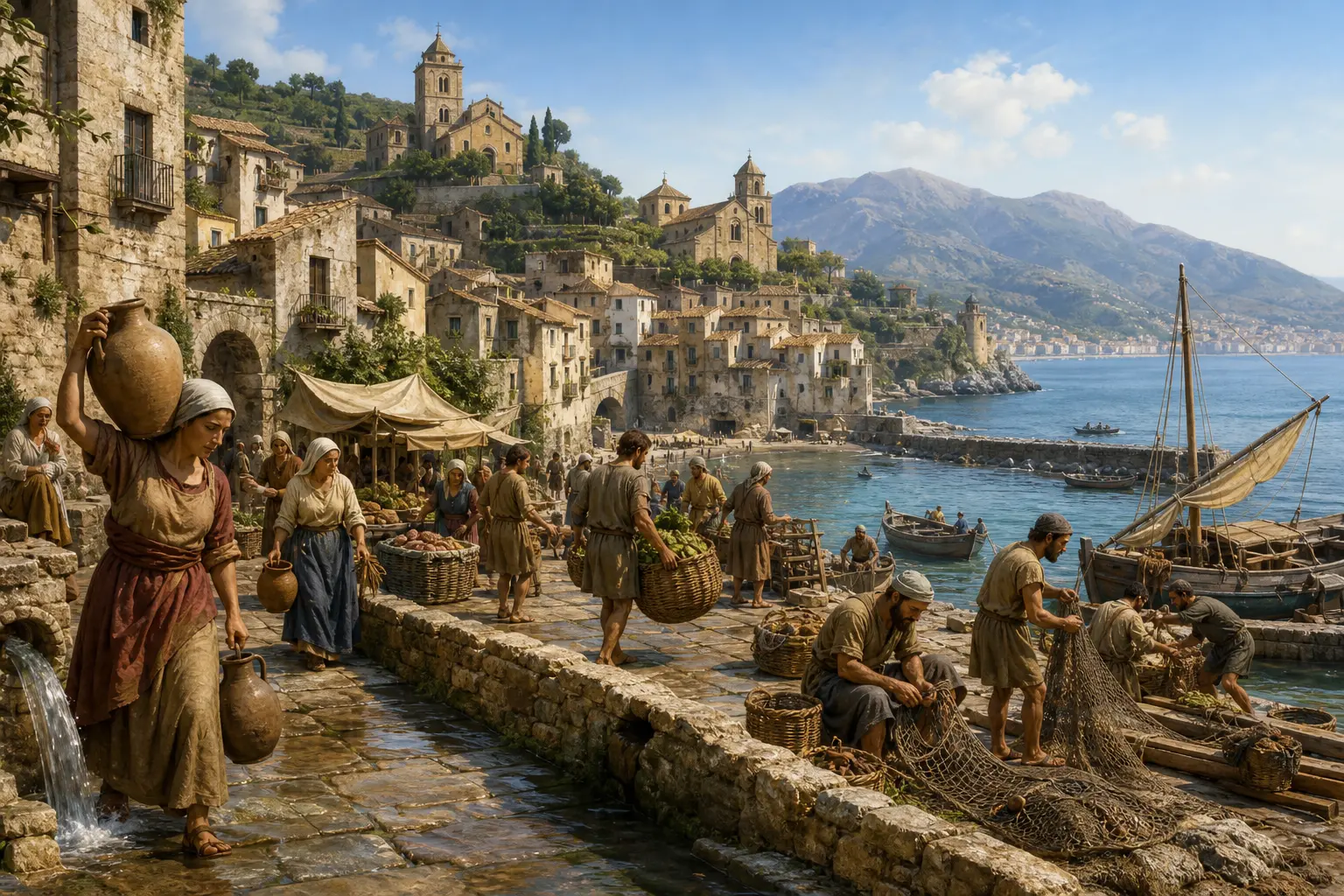
Housing in 11th-century Salerno followed the shape of a coastal city pressed between sea, slopes, defensive walls, churches, lanes, and routes toward the hills. Better-off families lived in masonry houses with upper rooms, storage spaces, courtyards or small enclosed yards, and access to cisterns, wells, or neighborhood water points. These homes accommodated family members, servants, apprentices, and lodgers alongside household supplies, business documents, tools, and valuables. Some combined residence and work, with a shop, storeroom, or office at street level and sleeping or reception rooms above. Shutters, doors, locks, roof tiles, plaster, and stone steps needed steady maintenance against salt air, rain, smoke, and daily wear.
Ordinary households lived more tightly, often in rented rooms, subdivided houses, or workshop dwellings near kin, churches, markets, and work sites. Cooking, sleeping, storage, craft production, childcare, and mending could happen in the same room; better-off households could separate kitchen work from reception rooms. Chests, stools, benches, trestle tables, bedding, hooks, and wooden shelves furnished these shared spaces. Roof spaces, doorways, stairs, and small yards offered room to dry laundry, sort produce, mend nets, air bedding, and speak with neighbors. Hearth and brazier smoke, insects in stored grain, damp walls, and fire risk shaped domestic arrangements.
Water was a daily measure of comfort. Salerno had streams, conduits, fountains, cisterns, and neighborhood collection points, but many households still depended on repeated carrying by women, children, servants, or hired water carriers. Waste, animals, and food scraps had to be managed in crowded lanes where privacy was limited and reputation mattered. Domestic routines extended into the street, church forecourt, market, quay, mill path, garden plot, and public water source. Neighbors watched doors, shared news, helped after illness or storm damage, and noticed unpaid debts or neglected buildings. Household comfort depended on resources within the home and cooperation in the shared spaces beyond it.
Food and Daily Meals
Meals in 11th-century Salerno centered on bread, made from wheat when available and mixed grains in poorer households or leaner seasons. Beans, chickpeas, lentils, greens, onions, garlic, leeks, cabbages, herbs, olives, figs, grapes, pears, nuts, and chestnuts helped stretch the table, alongside cheese, eggs, and occasional meat. The hills and inland farms supplied grain, pasture products, firewood, fruit, and vegetables; the sea provided fresh fish, shellfish, and salted fish, including foods suitable for fasting days. Olive oil flavored cooking and helped preserve food, while wine was both a daily drink and a market product.
Food access varied sharply by wealth. Prosperous households could buy finer bread, more cheese, poultry, pork, kid, lamb, spices, dried fruits, imported ingredients, and better wine. Clerical and medical households might receive food through rents, gifts, students, clients, or institutional stores. Poorer families relied on cheaper grains, legumes, garden produce, gathered greens, small fish, leftovers, and careful measuring of grain bins. Christian fasting calendars affected the use of meat, dairy, and fish, but daily necessity often mattered as much as rule. Markets, bakers, millers, fish sellers, oil dealers, taverns, and peddlers turned regional produce into household meals, and food prices were watched closely.
Preparing meals required grain grinding or milling, kneading dough, heating or renting ovens, soaking legumes, cleaning fish, and washing vegetables. Water and purchased or gathered fuel supported this work. Meals followed daylight, bells, market hours, craft work, and harbor arrivals rather than precise clock time. Feast days brought better bread, meat, sweets, wine, candles, and guests when a household could afford them. On ordinary days, careful provision of bread, oil, legumes, water, fuel, and salt helped families withstand illness, bad weather, and uncertain supply.
Work and Labor
Work in Salerno joined coastal labor, inland agriculture, church service, crafts, writing, and medical learning. Fishers, sailors, boatmen, and pilots worked alongside porters, guards, brokers, and warehouse hands. Rope workers, sail repairers, net makers, ship carpenters, and caulkers maintained maritime equipment. Cargo included grain, oil, wine, fish, timber, wool, cloth, hides, ceramics, wax, metal goods, salt, and herbs, with written agreements also moving through the port. The city was close enough to Amalfi to share in Tyrrhenian maritime habits, but its daily economy also depended strongly on its hinterland, religious institutions, and reputation for healing and study.
Behind the waterfront and around churches, food trades supported the markets described above. Potters, masons, carpenters, lime burners, smiths, cobblers, leatherworkers, textile workers, dyers, tailors, basket makers, candle makers, and domestic servants supplied other everyday needs. Women worked in spinning, weaving, sewing, laundering, food preparation, childcare, small retail, household accounts, service, and family businesses, even when formal documents recorded men more often. Farmers, gardeners, shepherds, woodcutters, muleteers, and tenants supplied the city from terraces, fields, orchards, vineyards, olive groves, mills, and pastures. Seasonal harvests changed urban workloads as grain, grapes, olives, chestnuts, and firewood arrived for storage and sale.
Salerno's medical reputation added distinctive work. Physicians, teachers, students, copyists, herbal sellers, apothecary-like specialists, barbers, midwives, nurses, and household caregivers participated in healing, though not all belonged to formal learning circles. Their work could include reading texts, preparing simples and compound remedies, observing urine and pulse, setting diets, bleeding when judged appropriate, binding wounds, advising childbirth care, and managing fever, digestion, pain, and injury. Notaries and scribes recorded rents, sales, dowries, wills, disputes, debts, apprenticeships, and donations. A single household might combine small trade, craft labor, rent income, women's textile work, garden produce, and a son's schooling. Household resources thus drew on several kinds of labor, with demands changing through the seasons.
Social Structure
Salerno's society was hierarchical, but daily contact crossed rank constantly. At the top were great landholding families, high clergy, major officeholders, wealthy merchants, physicians with strong patrons, and households connected to church and civic authority. Below them stood smaller merchants, notaries, teachers, shipmasters, shopkeepers, prosperous artisans, priests, monks, nuns, students, sailors, fishers, porters, apprentices, servants, widows, migrants, rural tenants, the poor, and enslaved or unfree people whose legal status sharply limited their choices. Status depended on property, family name, occupation, education, legal freedom, patronage, gender, reputation, and access to written records.
The household was the main unit of security. It could include parents, children, older relatives, servants, apprentices, lodgers, students, dependents, and workers tied to a family enterprise. Marriage and dowry arrangements linked property, kinship, and business, while wills and donations tied families to churches, monasteries, and charitable memory. Parish churches, monasteries, the cathedral, saints' cults, burial places, bells, festivals, and processions structured public time. Religious life did not remove inequality, but it created shared spaces where rich patrons, clergy, artisans, servants, and the poor met through worship, almsgiving, feast preparation, funerals, and obligations to neighbors.
Salerno's position in southern Italy brought contact among Latin, Lombard, Greek, Jewish, Muslim, Norman, and other Mediterranean people, though the city was not an equal meeting ground. Language skill, legal status, religion, and patronage affected access to work and protection. Written contracts could help secure property and credit, but they also favored people with money, witnesses, and notarial access. Medical learning gave some practitioners prestige, yet most caregiving remained domestic and informal. Neighborhood reputation mattered intensely: who paid debts, kept a clean doorway, repaired roofs, honored agreements, attended church, helped kin, trained apprentices, and treated clients fairly. Daily society in Salerno was therefore cooperative and unequal at the same time, held together by family obligation, religious routine, credit, craft skill, local memory, and the practical need to share water, food supply, labor, and street space.
Tools and Technology
Salerno's daily technology served cooking, construction, transport, and public infrastructure. Kitchens used ceramic pots, amphorae, jars, baskets, knives, mortars, pestles, ladles, wooden bowls, querns, braziers, lamps, cauldrons, and storage chests. Builders used hammers, chisels, saws, adzes, trowels, plumb lines, ropes, ladders, and scaffolds with lime, tiles, timber, and stone. Boats carried oars, sails, ropes, and anchors; caulking irons, nets, and hooks served maintenance and fishing. Cargo moved in baskets, sacks, jars, barrels, bales, and chests, with scales, weights, seals, and locks supporting exchange and safekeeping. Carts or pack animals helped where streets allowed. Mills, conduits, fountains, cisterns, drains, steps, quays, and retaining walls supported the city's routines.
Writing and healing required specialized equipment. Notaries and clerics used parchment, early paper where available, ink, pens, wax, seals, knives, rulers, account marks, and document chests. Medical practice used herb bundles, jars, scales, mortars, pestles, strainers, oils, salves, bandages, cautery tools, lancets, basins, cups, and written recipe collections. Textile work used spindles, looms, needles, shears, dye vats, washing basins, and drying lines. Glass, reed, and bone also belonged to the range of materials used in homes and workshops. Many tools crossed occupational boundaries, linking household tasks with paid work.
Clothing and Materials
Clothing in 11th-century Salerno used wool, linen, leather, and, for wealthier households, silk or finer imported cloth. Ordinary garments included tunics, shirts, gowns, cloaks, hoods, veils, caps, belts, aprons, hose, sandals, and leather shoes. Work exposed them to salt spray, dust, kitchen smoke, fish smells, dye, oil, lime, and mud. Linen underlayers protected outer garments from sweat and heavy washing, while cloaks and hoods guarded against rain and sea wind. Better-off residents used cleaner linen, brighter dyes, decorated borders, jewelry, clasps, finer wool, and occasional silk to mark status, respectability, and feast days.
Textiles were valuable household assets: kept in chests, pledged for credit, included in dowries, given to churches, passed to servants, or sold secondhand. Cutting garments down for children, patching, re-dyeing, and reuse as bedding or wrappings extended their life. Washing, airing, brushing, folding, sewing, and pest control required regular labor, especially from women, servants, and apprentices. Leather supplied shoes and belts as well as bags, pouches, harness, straps, scabbards, book covers, and work fittings. Dress protected the body, carried small objects, and made rank and household order visible; its upkeep preserved costly materials.
Daily life in Salerno during the 11th century rested on the meeting of coast, hillside, church, market, and learned medicine. Its residents lived through ordinary maintenance: carrying water, baking bread, buying fish, tending vines and olives, copying documents, preparing remedies, repairing boats and roofs, sewing cloth, observing fasts and feast days, and negotiating trust in crowded neighborhoods. The city's wider reputation mattered, but everyday survival depended on practical skill, household discipline, local relationships, and the steady movement of food, materials, knowledge, and labor through its lanes and harbor.
Related pages
These pages offer comparisons across different settings and, in some cases, periods. They are not direct evidence for daily life in 11th-century Salerno.
- Daily life in Amalfi during the 11th century — Same-century comparison with another coastal city.
- Daily life in Palermo during Norman Sicily — Comparison with the distinct setting of Norman Sicily.
- Daily life in Genoa during the 13th century — Later, 13th-century comparison in a different city.
- Daily life in Bologna during the 13th century — Later, 13th-century comparison in a different city.
References
- Skinner, P. (1995). Family Power in Southern Italy: The Duchy of Gaeta and Its Neighbours, 850-1139. Cambridge University Press.
- Kreutz, B. M. (1991). Before the Normans: Southern Italy in the Ninth and Tenth Centuries. University of Pennsylvania Press.
- Loud, G. A., & Metcalfe, A. (Eds.). (2002). The Society of Norman Italy. Brill.
- Siraisi, N. G. (1990). Medieval and Early Renaissance Medicine: An Introduction to Knowledge and Practice. University of Chicago Press.
- Green, M. H. (2001). The Trotula: An English Translation of the Medieval Compendium of Women's Medicine. University of Pennsylvania Press.