Daily life in Thessaloniki during the 11th century
A grounded look at routines in a Byzantine port where households, workshops, markets, churches, roads, and the Thermaic Gulf connected city life with Macedonia and the wider Mediterranean.
Thessaloniki in the 11th century was a large walled city, an administrative and ecclesiastical centre, and a busy port on the northern Aegean. Its main east-west avenue followed the line of the Roman Via Egnatia, while smaller streets climbed toward the upper city or descended to the waterfront. Residents encountered imperial officials and visiting merchants, but ordinary days were shaped more directly by bread ovens, water jars, workshop noise, market bargaining, church bells, household care, and the movement of produce from the Macedonian countryside. The brick church now called Panagia Chalkeon, founded in 1028 beside a commercial part of the city, remains a physical marker of this urban world.
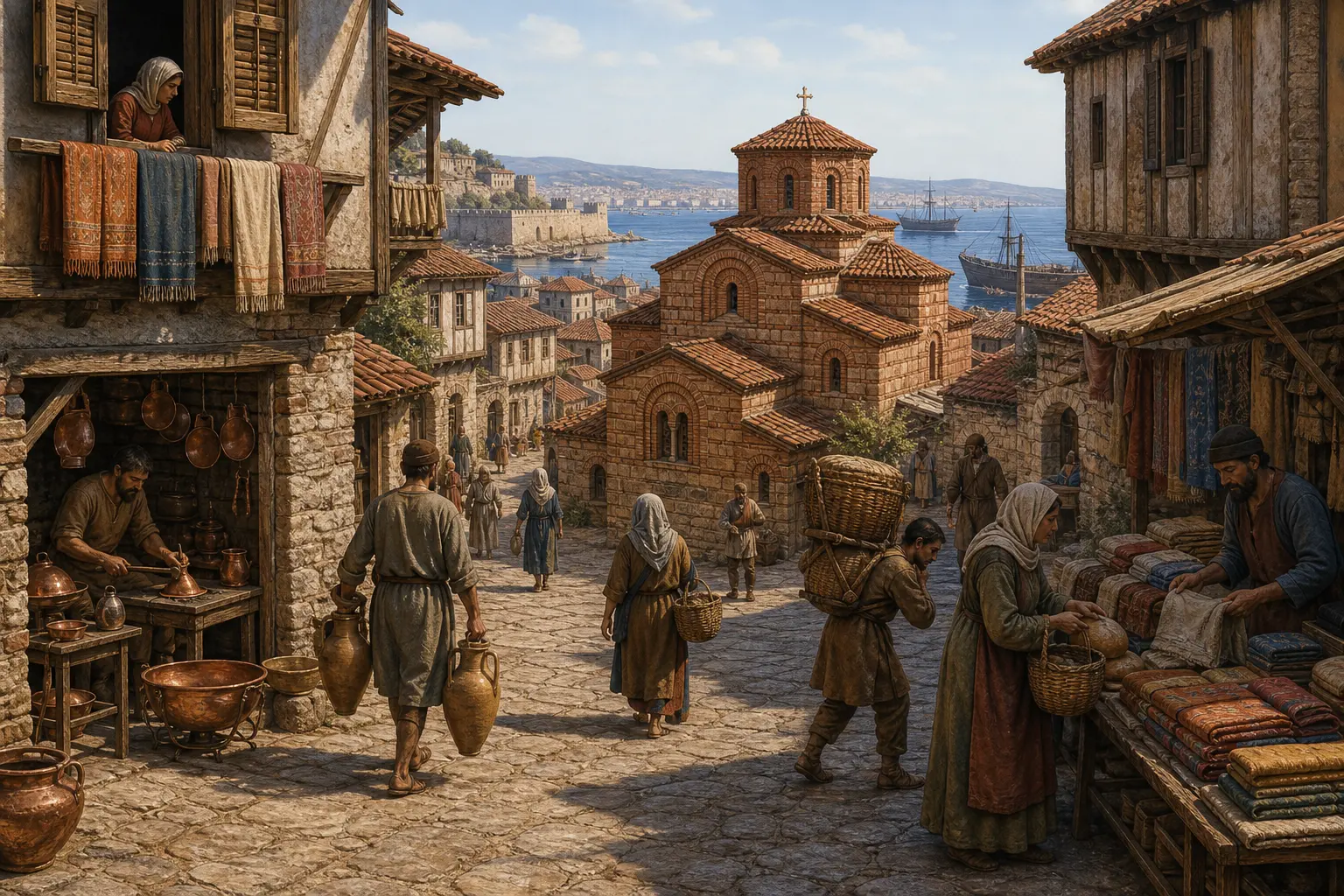
This overview combines evidence about Thessaloniki with broader studies of Byzantine daily life. The references cover different periods and places; details about household routines, tools, and clothing should be read as a reconstruction rather than a complete record of every 11th-century household.
Housing and Living Spaces
Thessaloniki occupied sloping ground between fortified heights and the sea. Within its late Roman walls, medieval residents reused an inherited network of major streets, drains, churches, baths, masonry, and building plots, although older spaces were repeatedly divided, rebuilt, or given new purposes. The broad avenue known as the Leophoros remained a public spine. Away from it, irregular lanes and passages led to houses, courtyards, workshops, religious foundations, gardens, and storage areas. Wealthier households could occupy multiroom masonry residences with tiled roofs, plastered walls, upper floors, reception rooms, storerooms, and enclosed yards. Their property might also include a street-facing shop or rental rooms.
Most people lived more compactly. A modest dwelling might have one or two principal rooms around a work area or small court, with cooking, sleeping, child care, storage, and production sharing limited space. Timber floors, partitions, doors, shutters, and roof structures stood above stone or brick lower walls. Chests protected textiles and valuables; shelves, pegs, baskets, ceramic jars, stools, low tables, mattresses, and bedding made rooms adaptable. Hearth smoke, lamp soot, damp, insects, and rodents demanded regular cleaning. Households patched plaster, replaced roof tiles, swept yards, repaired shutters, aired cloth, and watched cooking fires closely in crowded districts.
Water and waste tied every home to its surroundings. Wells, cisterns, fountains, channels, and older conduits supplied water unevenly, so carrying jars was a recurring task, commonly assigned to servants, women, or younger household members. Courtyards and drains helped manage rainwater on the slope, while refuse pits, containers, animals, and workshop debris required practical arrangements that archaeology only partly reveals. Privacy depended on doors, curtains, upper rooms, and household convention rather than complete separation from neighbors. The street, church forecourt, bakery, market, fountain, and workshop threshold all extended domestic life beyond the walls of a house. Living space was therefore maintained through constant movement: fetching water, buying fuel, borrowing tools, carrying food, visiting kin, exchanging news, and negotiating the shared use of narrow urban spaces.
Food and Daily Meals
Bread and grain preparations formed the dependable base of the diet. Wheat was preferred where households could afford it, while barley, millet, and mixed flours provided cheaper alternatives. Bakers and millers served the urban population, but grain still had to be purchased, stored against damp and pests, kneaded, and carried to an oven. Beans, lentils, chickpeas, onions, leeks, cabbages, leafy greens, olives, fruit, nuts, cheese, and eggs added variety. The plain and uplands around Thessaloniki supplied grain, vines, livestock, garden produce, timber, and other necessities. Olive oil and wine arrived through regional trade as well as local production, and salt preserved foods that could not be eaten immediately.
The Thermaic Gulf gave the city access to fresh and salted fish, shellfish, and coastal transport. Fish sellers, gardeners, farmers, shepherds, butchers, wine dealers, oil sellers, bakers, and itinerant vendors brought food into markets along the main streets and near busy gates and waterfront routes. Access remained unequal. Prosperous households could purchase finer wheat bread, better wine, more meat, imported condiments, sweets made with honey, and a wider choice of fish and fruit. Poorer families depended more heavily on coarse bread, legumes, vegetables, small fish, gathered foods, and careful reuse of leftovers. Christian fasting rules made fish, shellfish, pulses, and vegetables especially important during long periods when meat or dairy foods were restricted.
Cooking was slow work organized around fuel and water. Earthenware pots simmered soups and stews; iron cauldrons, knives, mortars, pestles, wooden bowls, ladles, amphorae, jugs, baskets, and storage jars served preparation and keeping. Many families ate from shared dishes or individual ceramic bowls, using spoons, knives, and fingers according to the food. Meals followed daylight, labor, and worship rather than mechanical clock time. Morning food could be simple, with a more substantial meal after work had advanced. Feast days, baptisms, weddings, funerary commemorations, and hospitality brought better bread, wine, meat, fish, or sweets when means allowed. Everyday security, however, meant having enough grain, oil, salt, clean water, and fuel to withstand price changes, illness, winter weather, and interruptions in supply.
Work and Labor
Thessaloniki's position joined sea routes with the Via Egnatia and roads into the Macedonian interior. Porters moved sacks, amphorae, timber, baskets, and textile bundles between ships, warehouses, pack animals, and markets. Sailors, fishers, boatmen, ship carpenters, rope workers, caulkers, brokers, guards, and innkeepers supported waterfront traffic. On land, muleteers and carters brought grain, wine, oil, livestock, hides, wool, wood, and produce from villages and estates. Coins circulated, but exchange also relied on credit, obligations, rents, and payments in kind. The commercial streets drew local buyers, rural visitors, travelling merchants, and residents seeking food, clothing, tools, or repair work.
Archaeological and written evidence records a wide range of urban crafts. Potters and tile makers managed clay, wheels, molds, and kilns; smiths and coppersmiths worked iron and copper alloys; goldsmiths and silversmiths supplied wealthier clients and churches. Builders, stonecutters, bricklayers, lime workers, carpenters, mosaicists, painters, and glassworkers maintained the city's houses and religious buildings. Textile work involved preparing fibre, spinning, weaving, fulling, dyeing, tailoring, and selling wool, linen, and silk. Leatherworkers, shoemakers, bone carvers, candle makers, perfumers, bakers, and food processors occupied other niches. The church of Panagia Chalkeon, whose name is associated with copper workers, shows how craft identity and sacred topography could meet in the city centre.
Work was usually organized through households, small workshops, patronage, and apprenticeship rather than large factories. Women spun, wove, sewed, prepared and sold food, kept accounts, managed property, worked in family trades, and performed paid or unfree domestic service, though documents often made their labor less visible. Children carried messages and materials before learning adult skills. Clergy, monks, teachers, scribes, notaries, tax personnel, and other officials formed a literate occupational world connected to Constantinople, while farmers and herders remained essential to the city's survival. Daily work followed daylight and season: construction slowed in bad weather, fishing followed water and wind, and harvests created surges of transport, storage, processing, and sale. For a later comparison, see daily life in late-medieval Constantinople.
Social Structure
Thessaloniki's residents occupied unequal positions defined by legal status, wealth, office, occupation, gender, family, and access to patrons. Senior officials, major landowners, wealthy merchants, and high clergy controlled substantial property and resources. Below them were lesser officials, priests, monks, notaries, teachers, shipmasters, shopkeepers, artisans, and traders whose circumstances ranged from comfortable to precarious. Wage laborers, porters, servants, apprentices, tenant farmers, the poor, enslaved people, and people bound by other forms of dependence had less control over their work and movement. These categories were not sealed apart: an artisan might own a house, a landholder might trade, and a household might include relatives, servants, apprentices, lodgers, and dependants.
Family and household provided the main framework for production, care, credit, inheritance, and reputation. Marriage arrangements moved property and textiles between families; widows could manage assets or businesses; relatives supported children, older people, and the sick. Women were expected to oversee much domestic work and textile production, yet they also appeared in property transactions, markets, services, and crafts. Neighbors observed one another's conduct in lanes, at fountains, and in shops. Trust affected who received credit, work, witnesses, help after illness, or support in a dispute. Literacy was concentrated among clerics, officials, and some commercial households, making the services of scribes and notaries important for contracts, petitions, rents, and donations.
Orthodox Christian practice structured the calendar through Sundays, fasts, feast days, processions, baptisms, marriages, burials, and devotion to Saint Demetrios, the city's patron. Churches and monasteries employed workers, owned property, distributed charity, and drew together people of different ranks without erasing social distinctions. Thessaloniki also had a long-established Jewish community, while merchants, travelers, and migrants brought other languages and customs through its port and roads. Public life mixed cooperation with hierarchy: people shared markets and worship spaces, but clothing, titles, seating, servants, and legal privileges made rank visible. Compared with ports such as Trebizond, Thessaloniki occupied a different coast and century, yet both depended on the daily negotiation of household ties, regional exchange, religious institutions, and mobile trading communities.
Tools and Technology
Most technology in 11th-century Thessaloniki took the form of durable hand tools, containers, installations, and learned routines. In homes, people used ceramic cooking pots, jugs, amphorae, storage jars, braziers, lamps, knives, mortars, pestles, wooden bowls, baskets, chests, brooms, needles, and spindle whorls. Looms and spindles turned wool, flax, and silk into cloth. Potter's wheels and kilns produced cooking ware, tableware, tiles, and transport vessels. Smiths relied on furnaces, bellows, anvils, hammers, tongs, chisels, files, molds, and crucibles, while builders used saws, adzes, axes, drills, trowels, plumb lines, ropes, scaffolds, lime mortar, brick, stone, and reused architectural material.
Commerce depended on balances, weights, measures, coins, seals, locks, account records, sacks, barrels, and amphorae. Parchment, paper in more limited contexts, reed pens, ink, wax, and lead seals supported administration and correspondence. Carts and pack animals carried goods where streets allowed; human porters handled narrower routes; oared and sailing vessels linked the harbor with the Aegean. Wells, cisterns, drains, channels, fountains, streets, gates, quays, and fortifications were large technologies maintained by repeated labor. Oil lamps and candles provided localized light, and hearths or braziers gave limited heat. Skill mattered as much as equipment: controlling kiln temperature, mixing mortar, judging metal color, setting a loom, waterproofing a roof, preserving food, and repairing a jar extended the useful life of costly materials.
Clothing and Materials
Wool and linen supplied most clothing, while silk was more expensive and strongly associated with wealth, office, church use, and special display. Men commonly wore a tunic with a belt and added a cloak or heavier outer garment in cold or wet weather. Women wore long tunics or dresses with layered outer garments, belts, head coverings, and veils shaped by status and setting. Laborers belted garments securely for carrying and workshop tasks. Leather shoes, sandals, caps, hoods, and cloaks protected residents on muddy lanes and during winter winds from the gulf.
Dyes, woven patterns, borders, embroidery, jewelry, fine belts, and clean white linen made prosperity visible. Official and clerical dress could signal rank more precisely, while most residents relied on muted or unevenly dyed cloth. Textiles were valuable property rather than disposable goods. Households washed, aired, brushed, patched, relined, re-dyed, cut down, inherited, pledged, and resold garments. Wool, linen, silk, leather, fur, clay, glass, iron, copper alloy, wood, bone, reed, and wax filled homes and workplaces. Material quality varied by means, but maintenance was universal: a replaced shoe sole, patched elbow, mended basket, stoppered amphora, sharpened knife, or riveted tool kept scarce resources useful across seasons and sometimes generations.
Daily life in 11th-century Thessaloniki rested on the meeting of a sheltered port, a productive hinterland, established roads, dense neighborhoods, and powerful religious institutions. The city was important beyond Macedonia, yet it functioned through ordinary maintenance: carrying water, tending fires, buying bread, spinning thread, weighing goods, repairing roofs and vessels, keeping fasts, training apprentices, recording agreements, and caring for relatives. Its surviving churches and excavated objects preserve only part of that world, but together they show an urban society sustained by practical skill, household discipline, regional exchange, and repeated cooperation across streets, workshops, markets, and the waterfront.
Related pages
- Daily life in Constantinople during the late medieval period
- Daily life in Veliko Tarnovo during the 13th century
- Daily life in Amalfi during the 11th century
- Daily life in Trebizond during the 13th and 14th centuries
References
- Antonaras, A. C. (2016). Arts, Crafts and Trades in Ancient and Byzantine Thessaloniki: Archaeological, Literary and Epigraphic Evidence. Propylaeum. https://doi.org/10.11588/propylaeum.100.124
- Raptis, K. T. (2016). “The Commercial Map of Byzantine Thessalonike: Tracing the Marketplaces of the City from the 9th Century until the Ottoman Occupation.” Deltion of the Christian Archaeological Society, 37. https://ejournals.epublishing.ekt.gr/index.php/deltion/article/view/14214
- Museum of Byzantine Culture. Aspects of Public and Private Life. https://www.byzantinemuseum.gr/en/exhibitions/48/permanent-exhibition/the-byzantine-world/29/aspects-of-public-and-private-life
- Kaminiates, J. (2000). The Capture of Thessaloniki, translated by D. Frendo and A. Fotiou. Australian Association for Byzantine Studies.
- Rautman, M. (2006). Daily Life in the Byzantine Empire. Greenwood Press.
- Laiou, A. E., & Morrisson, C. (2007). The Byzantine Economy. Cambridge University Press.
- Parani, M. G. (2003). Reconstructing the Reality of Images: Byzantine Material Culture and Religious Iconography (11th-15th Centuries). Brill.